- Daily AI Edge
- Posts
- ⚠️ OpenAI Shuts Down Alignment Team
⚠️ OpenAI Shuts Down Alignment Team
+ Turn SOP docs into talking-head training videos 🎥

Leo Grundström
February 13th, 2026
In partnership with

Today’s menu 🍽️👇️
Length: 5 minutes ⏰
OpenAI Shuts Down Alignment Team ⚠️
Anthropic Promises Grid-Friendly AI 🏗️
Facebook Adds AI & Animated Profiles 🎭
Musk Shifts Focus to Lunar Ambitions 🌙
Master AI video with SOP doc 📸
Prompt of the week 💬
Top AI tools of the week ⚒️
Learn how to make every AI investment count.
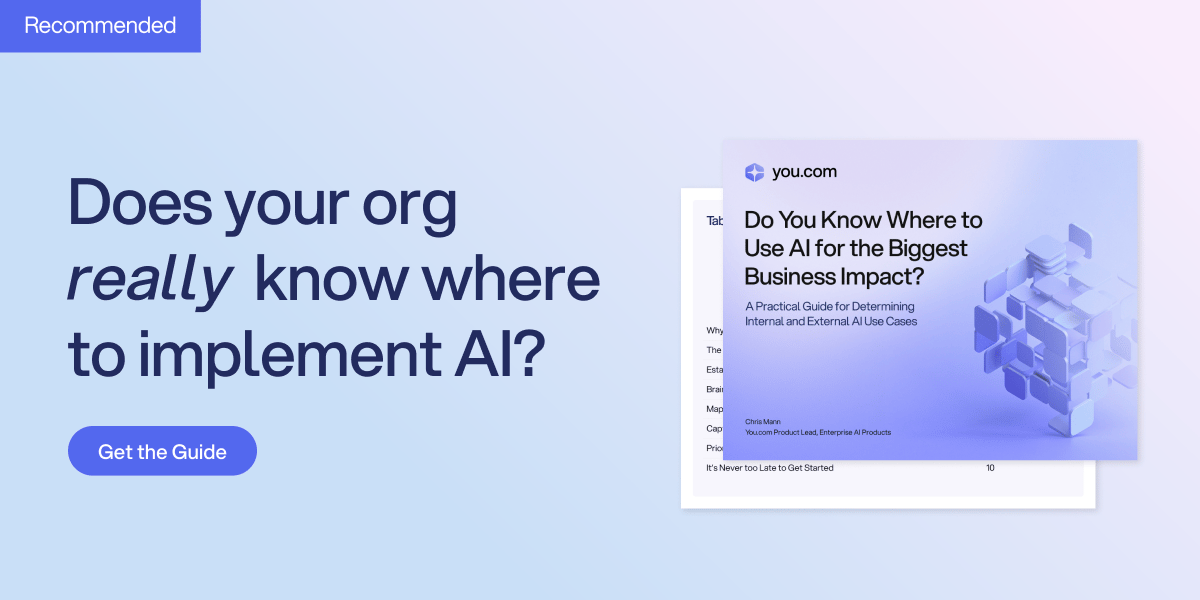
Successful AI transformation starts with deeply understanding your organization’s most critical use cases. We recommend this practical guide from You.com that walks through a proven framework to identify, prioritize, and document high-value AI opportunities.
In this AI Use Case Discovery Guide, you’ll learn how to:
Map internal workflows and customer journeys to pinpoint where AI can drive measurable ROI
Ask the right questions when it comes to AI use cases
Align cross-functional teams and stakeholders for a unified, scalable approach
FRESH AI NEWS
OpenAI Disbands Mission Alignment Unit 🤖

OpenAI has shut down its dedicated mission alignment team, the group focused on studying and mitigating long-term AI risks, a move that’s raising eyebrows inside and outside the industry 🤯
OpenAI disbanded the unit tasked with long-term safety, ethics, and alignment research 🧠
Some alignment work is being folded into other teams, but the dedicated structure is gone 🔁
Observers say this could weaken OpenAI’s long-term risk focus just as models grow more capable 📉
Company leaders framed it as organizational realignment rather than abandoning safety work 💬
Some alignment experts are now embedded in product and governance teams instead of a standalone group ⚙️
Safety researchers see potential efficiency gains, but worry dedicated focus may be diluted 📊
Why You Should Care: Mission alignment ensures AI benefits humanity. Disbanding a dedicated team shifts focus from standalone safety research to integrated product delivery, potentially impacting OpenAI's ability to address long-term AI risks.
Anthropic Plans Power-Conscious Expansion 🚀

Anthropic pledged to absorb the energy cost impact of its expanding AI data centers , paying for grid upgrades and backing new power sources so consumers don’t see higher electricity bills because of its infrastructure ⚡
Anthropic will pay 100% of the transmission and interconnection costs needed to hook its data centers to local grids, instead of letting those expenses get passed on to households 💳
The company plans to bring new power generation online and expand grid capacity to match AI demand, tackling pressure on utilities rather than relying on existing sources 🔌
Where new power isn’t yet available, Anthropic will work with utilities to estimate and cover price effects its centers might cause 📈
Part of the pledge includes investing in grid optimization tools and energy-efficient tech to reduce strain on local systems 🔍
This follows similar moves by other AI companies, like Microsoft and OpenAI , as public and political scrutiny over data center power use grows 🤝
Why You Should Care: AI data centers use a lot of power, causing grid strain and higher consumer costs. Anthropic plans to cover grid upgrades to protect consumers and ease community resistance, setting a precedent for responsible energy cost management by AI companies.
Facebook Rolls Out AI Profile Upgrades 🤖

Meta is rolling out a suite of AI-enhanced creative tools on Facebook, including animated profile photos and AI-generated backgrounds for text posts, to boost engagement and expression 🎨
Users can now turn static profile images into AI-generated animated avatars with motion and style effects 🌀
Facebook is introducing AI-suggested backgrounds that let text posts pop with context-aware visuals 🎨
The system suggests background designs based on post content, helping users add flair with minimal effort 🧠
These features live directly in the Facebook composer, no separate app needed 📱
Features are being rolled out gradually to global users across iOS, Android, and web 📊
Why You Should Care: This update highlights Meta's efforts to keep Facebook competitive by integrating creative AI tools, aiming to boost user engagement and offer new content personalization options amid competition from generative AI platforms and short-form video apps.
Co-Founders Exit, Musk Looks to Space 🌌

As key co-founders exit and IPO chatter intensifies, Elon Musk is redirecting attention toward ambitious lunar and deep-space goals, reframing the narrative around long-term vision over short-term turbulence 🌕
Several early co-founders and senior figures have stepped away, fueling speculation about internal shifts 👥
Reports suggest a potential public offering could be on the horizon, increasing pressure around governance and growth metrics 📈
Musk has renewed emphasis on lunar missions, Starship progress, and deep-space milestones, spotlighting exploration goals 🚀
Messaging centers on scaling Starship for Moon missions, positioning the company as foundational to future space economies 🛰️
The pivot to grand space objectives coincides with scrutiny over finances, leadership, and long-term strategy 📊
Why You Should Care: As companies near an IPO, perception is key. Musk's focus on ambitious goals shifts the narrative to long-term vision, easing investor concerns and emphasizing visionary aims over executive changes. In tech, storytelling can rival financials, especially pre-IPO.
AI VIDEO WORKSHOP
Turn SOP docs into talking-head training videos 🎥

Learn how to convert static onboarding documents into polished AI-led training videos, so new hires can watch instead of read, and you can scale onboarding without repeating yourself ✅
Here’s how to get started 👇️
Paste your onboarding material into Claude or ChatGPT and prompt:
“Rewrite this as a concise training script for an AI presenter. Keep it under three minutes, use clear bullet-style text overlays, and structure it for on-screen delivery.”
Adjust tone (formal, friendly, instructional) based on your company culture.Export the script and move into Synthesia.
Save the script as a text file, then head to Synthesia → Create New Video → AI Script Upload. Include context about the training objective and target audience to guide the presentation style.Select your visual format and generate the draft.
Choose a template, review the auto-generated scene outline, tweak slide flow if needed, and click generate. Rendering typically takes 10–25 minutes.Publish and distribute the finished video.
Download the final file and embed it inside internal docs, onboarding portals, Notion pages, or learning management systems for easy access.
Pro Tip: Create a repeatable template to batch-convert onboarding docs into short, modular videos, establishing a scalable and consistent training system for new team members ✨
The best place on the Internet to learn about AI! 🌐 🤖

I just started my own X page where I provide AI news, guides, hacks and more (for FREE)!
We don’t miss a day, that means you get the most recent AI news, practical workflows, expert guides and premium content everyday.
TOOLS OF THE WEEK
These AI tools are going VIRAL 🐝
GLM-Image - Z AI’s new open-source image generation model 🤖
Claude Cowork - Claude Code’s agentic abilities, now available to Pro tier 🚀
GPT 5.2 Pro - OpenAI’s most advanced frontier model 🧮
Grok Imagine - xAI's image and video generation platform 🌌
Warm regards,
Leo Grundström / Founder of Daily AI Edge
Reply